
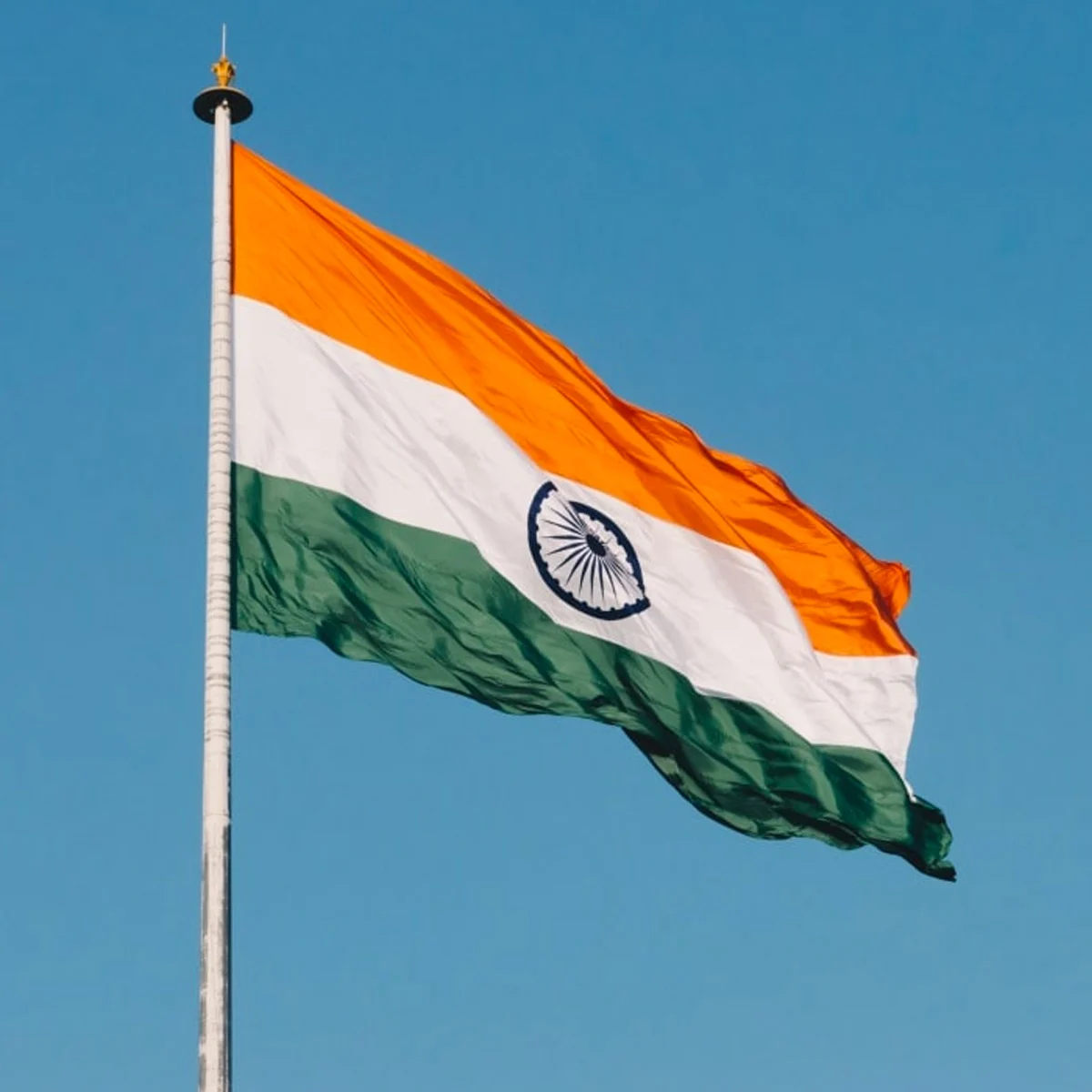
India remains a nation to watch. It is a growing economic power. It has now capacity to take its independent stand on issues facing the strife-torn world.
It no longer needs to be identified with one group of nations or the other. It has been trying to manage its own problems like corruption, population explosion and internal strife.
Putting behind the traumatic partition that coincided with its Independence, India is fast emerging as a super economic power. It has shed both its initial image of a “Panchsheel” nation and a leader of the Non-Aligned Movement (NAM) to carve for itself a new role of a global leader.
In celebrating 75th anniversary of its Independence and the glorious history of its people, culture and achievements, it has embarked upon Azadi Ka Amrit Mahotsav, an initiative of the BJP-led NDA Government.
“This Mahotsav is dedicated to the people of India who have not only been instrumental in bringing India thus far in its evolutionary journey but also hold within them the power and potential to enable Prime Minister Narendra Modi’s vision of activating India 2.0, fuelled by the spirit of Aatmanirbhar Bharat.
“The official journey of Azadi ka Amrit Mahotsav commenced on 12th March 2021 which started a 75-week countdown to our 75th anniversary of independence and will end post a year on 15th August 2023,” says an official announcement.
Besides a complete transformation of its political landscape, India has set for itself a target of becoming a self-reliant “manufacturing” hub.
Targets are lofty as the country is fighting to control disease, garbage disposal, supply of potable drinking water and delivery of affordable and reliable education and healthcare to its populace.
Those who ushered in a food production revolution – green revolution – are a discontented lot. They have been up in arms against intended policies and programmes of the Government.
They are convinced that amendments to older laws and promulgation of new laws are all aimed to benefit corporate houses as the nation has put behind its avowed socialist agenda. They allege that Ambanis and Adanis are pulling the strings.
The relentless efforts of the farming community has made the country self-reliant in food. It has at the same time left farmers under heavy debts forcing them to commit suicides. The Union Government was still not ready to give them their due. There was still no guarantee of a Minimum Support Price for their produce.
Farmers claim they have made the country “aatmanirbhar” on the food front but in return they find themselves under heavy debt.
The central and state governments continue to dither over waiving farm loans while huge debts of corporate and big industrial houses were being written off, rue farmers and their bodies.
These socio-economic issues notwithstanding, major problems facing the country are poverty, diseases, corruption, unemployment and cleanliness.
Various schemes launched from time to time, including “Swatch Bharat” were launched with lots of fanfare but have remained in paper only.
After 75 years of Independence, the State does not guarantee quality drinking water to its populace what to talk of controlling diseases and eradicating poverty. Women folk in many parts of the country have to walk miles to carry potable water for daily needs.
Corruption has been rampant. Little has been done to control the growing problem of unemployment. Finding little or no job avenues, the country has been witnessing a continuous brain and brawn drain.
Quality school and higher education and delivery of basic and primary health care are still beyond the reach of a common man.
Freedoms, too, are curbed. Those who speak out against the policies and programmes of the ruling class are dubbed as anti national, secessionist or antisocial elements. Minorities often complain of discrimination as the country enshrined as a social welfare state has glaring inequalities among equals.
These issues apart, India after Independence has created a place for itself in various areas, including space research.
It remains the biggest exporter of manpower, both skilled and unskilled. Above all, it is a leader in numbers.
Looking at its political horizon, the country has witnessed the rise and decline of several political parties, including the oldest national party, Congress.
The country also had a taste of emergency in the late 70s when all freedoms and rights were controlled by the State.
It also tasted multi-party or coalition governments, both at centre and the provinces.
Debates like autonomy for States and centre-State relations have been continuing without reaching any conclusive results.
Inter-State territorial and river water disputes have been rocking the country frequently and repeatedly.
One of the redeeming features of Independent India has been its election process that despite criticisms from time to time has been delivering well. From printed ballot papers, it has successfully moved to Electronic Voting Machines (EVMs).
India is also making rapid strides in becoming totally digital as all payments from the government to people are digitalised.
It also has the highest penetration of the internet.
Many credit India for introducing the politics of appeasement. This concept has now travelled to the outside world as well. The issue of offering “freebies” to voters by political parties on the eve of elections is the subject of a lively debate going in the Apex Court in the Azadi Ka Amrit Mahotsav year.
Of course, India is a world leader!
Prabhjot Singh
Archived copy of the original page: Wayback Machine
No comments yet
Comments are closed.